
Impersonation and courier fraud
A caller says they're from the police or your bank and needs your help. Here's how impersonation and courier fraud works, and the golden rules that will keep you safe.
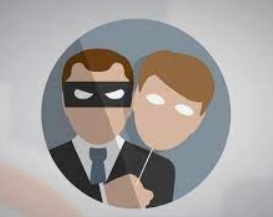
The phone rings. The caller says they're from the police, or from your bank's fraud team. There's a problem with your account, and they need your help – urgently.
This is impersonation fraud, and when the criminals send someone to your door to collect your cash, cards or valuables, it's called courier fraud. It mostly targets older people, especially those who live alone.
How it works
These criminals are experts at persuasion. They:
- claim authority – "This is Detective Sergeant Smith"
- create fear – "Your money is at risk unless you act now"
- rush you – so you don't have time to think
- confuse you – firing questions at you, or answering your questions with more questions
- keep you on the line – they don't want you to talk to anyone else
They can even make the call look as though it's coming from your bank's real number. This is called "spoofing", so the number on your screen isn't proof.
Common stories
- "We've arrested someone using your card." They ask you to confirm your PIN, then send a courier to collect your card "as evidence".
- "There are suspicious payments on your account." They take you through fake "security checks" to get your details, then say a courier will collect your old card.
- "Help us catch a corrupt bank worker." They ask you to withdraw cash, or buy gold or an expensive watch, and hand it over.
- "Your money isn't safe – move it to a safe account." There is no such thing as a safe account. The account belongs to the criminals.
The courier who collects your package often has no idea it's a scam.
"Hi Mum" – when they pretend to be family
A similar scam starts with a message: "Hi Mum, I've broken my phone, this is my new number." Soon there's an urgent bill they need help with. Criminals can now use AI to copy someone's voice from a short clip online, so a phone call can sound like a loved one too.
Always check by calling your family member on the number you already have. Some families agree a secret word to use in an emergency.
The golden rules
Your bank and the police will never:
- ask for your PIN or full password
- ask you to withdraw cash or move money to another account
- send someone to collect your card, cash or valuables
- ask you to buy gold, jewellery or watches
- ask you to keep a secret from bank staff
If you get a call like this:
- Hang up. A genuine caller won't mind.
- Call back on a number you know – from the back of your card or a bank statement. Use a different phone if you can, or wait at least five minutes, because criminals can keep the line open.
- Or call 159. This connects you safely to your own bank's fraud team.
Remember the A, B, C: Assume nothing, Believe nobody, Check everything.
Cutting down unwanted calls
- Ask your phone provider about its free call-blocking service.
- Register with the free Telephone Preference Service (www.tpsonline.org.uk (opens in a new tab)). It stops genuine companies cold-calling you – criminals ignore it, but it means fewer calls to deal with.
- Call-blocking devices such as trueCall are also available.
Look out for each other
Please tell friends, family and neighbours about this scam – especially anyone who lives alone.
Think you've been scammed?
- Contact your bank straight away, or call 159 to reach your bank's fraud team.
- Report it to Report Fraud (which replaced Action Fraud in December 2025): reportfraud.police.uk or 0300 123 2040.
- Forward scam emails to report@phishing.gov.uk
- Forward scam texts to 7726 – it's free, and goes to your mobile network.
- For support, contact Victim Support: www.victimsupport.org.uk (opens in a new tab) or 08 08 16 89 111.
Please don't feel embarrassed – scammers are professionals who fool people every day. Reporting helps stop them.
Need a hand?
Not sure whether something is a scam? Bring it along and we'll check it with you. Our friendly volunteers can help at our free sessions:
- Mondays 10am–12noon – St Wilfrid's Church Hall, Burgess Hill
- Thursdays 10am–12noon – Spire Café, St John's Church, Burgess Hill
- Haywards Heath – Bentswood @ No.34, America Lane (by appointment)
Call 07349 916841 or email spire.computer.help@gmail.com. No question is too small.
The Spire Computer Help Team
More hints and tips on this topic
Explanations of the words you might meet, in our glossary: Scams & Online Safety.